
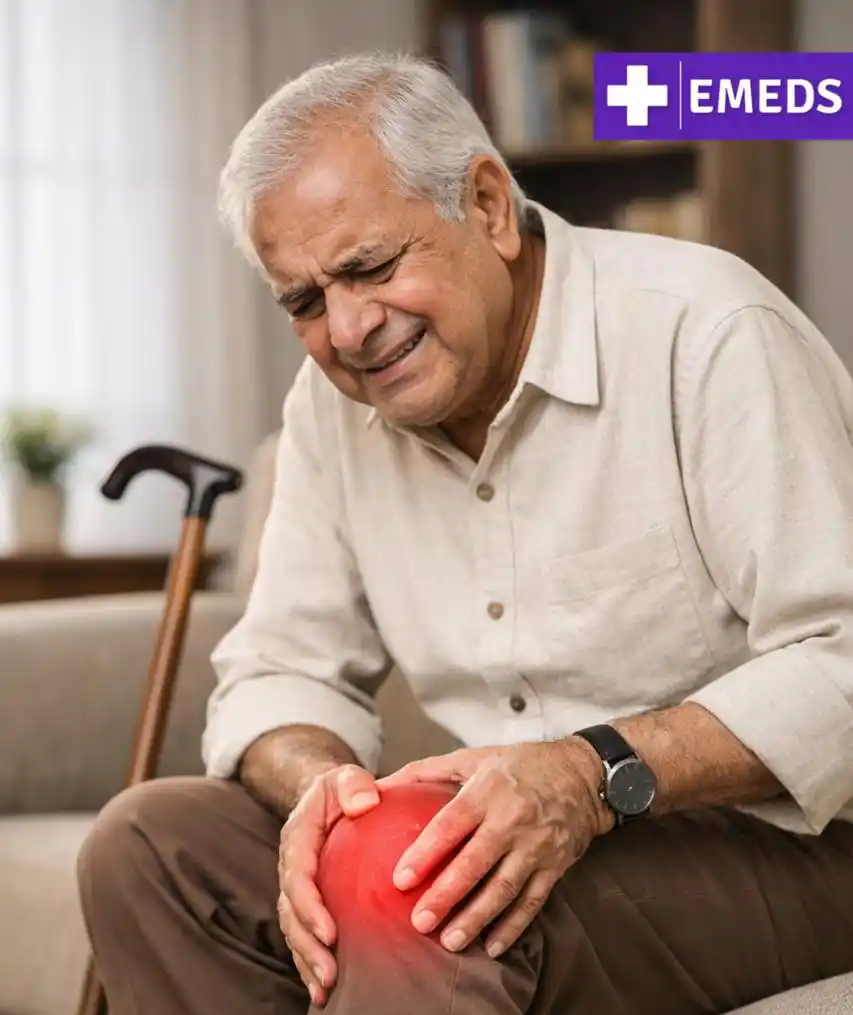
Joint Pain
Joint Pain is a common problem among senior citizens and can significantly affect daily activities and quality of life. Age-related wear and tear, reduced bone strength, and certain health conditions often lead to joint discomfort. With proper care, lifestyle changes, and timely treatment, joint pain can be effectively managed.
What Is Joint Pain in Old Age?
Joint pain refers to discomfort, stiffness, or swelling in joints such as knees, hips, shoulders, hands, and back. In older adults, joint pain usually develops due to degeneration of cartilage and reduced joint lubrication.
Common Symptoms of Joint Pain in Elderly
- Pain while walking or standing
- Stiffness, especially in the morning
- Swelling around joints
- Reduced flexibility and movement
- Crackling or grinding sound in joints
- Weakness in legs or arms
⚠️ Persistent pain should not be ignored and needs medical evaluation.
Causes of Joint Pain in Old Age
- Osteoarthritis (most common cause)
- Age-related cartilage wear
- Reduced bone density (osteoporosis)
- Lack of physical activity
- Obesity or excess body weight
- Vitamin D and calcium deficiency
- Past joint injuries
Effective Ways to Control Joint Pain
1. Stay Physically Active
- Gentle walking daily
- Stretching exercises
- Yoga for seniors
- Low-impact activities like swimming
🏃 Regular movement improves flexibility and reduces stiffness.
2. Maintain a Healthy Diet
- Calcium-rich foods (milk, curd, paneer)
- Vitamin D (sunlight, supplements if advised)
- Anti-inflammatory foods (fruits, vegetables)
- Adequate protein intake
🥗 Avoid excessive fried and processed foods.
3. Use Medicines as Prescribed
Doctors may recommend:
- Pain relievers (Paracetamol)
- Anti-inflammatory medicines
- Topical pain relief gels
- Calcium & Vitamin D supplements
⚠️ Avoid long-term painkiller use without medical advice.
4. Home Care Tips
- Apply warm compress for stiffness
- Use cold packs for swelling
- Maintain correct posture
- Use supportive footwear
- Avoid sitting for long hours
5. Manage Weight
Excess body weight increases pressure on joints, especially knees and hips. Maintaining healthy weight reduces joint strain.
When to See a Doctor?
- Severe or persistent joint pain
- Swelling and redness
- Difficulty walking or climbing stairs
- Joint deformity
- Pain not relieved by medicines
How Emeds Supports Joint Care
- ✔ Order joint pain medicines & supplements online
- ✔ Get delivery within 30 minutes
- ✔ Save up to 71% on genuine medicines
- ✔ Safe and trusted pharmacy service
Latest News


Leave a Comment